Primary configuration
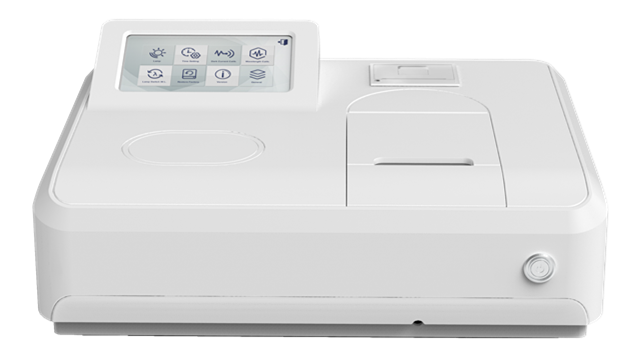
COD Analyzer B-COD
A dedicated COD workflow: digestion tubes, heating block and colorimetric reading specified as one set.
Samples above the linear range still need dilution and re-reading.

Industry Application
Explore Yoke analytical instruments for drinking water, surface water,
groundwater, wastewater, and environmental monitoring.
Overview
Water quality analysis involves a wide range of parameters, including pH, conductivity, dissolved oxygen, turbidity, COD, nutrients, major ions, and trace metals.
Yoke offers analytical instruments covering spectrophotometer, water analysis, ion chromatography, atomic absorption spectrometer, and sample preparation.
Instrument selection depends on the sample type, required measurement range, applicable test methods, and laboratory workflow.
Common Water Quality Parameters & Analytical Instruments
Explore common water quality parameters, analytical techniques, and corresponding instrument categories.
| Measurement task | Parameters / range | Typical method | Instrument group |
|---|---|---|---|
| pH, conductivity, dissolved oxygen | pH 0–14 · 0–200 mS/cm · 0–20 mg/L | Direct immersion, electrochemical | pH / conductivity / DO meters |
| Turbidity | 0–1000 NTU | Nephelometry | Turbidity meter |
| Color and single-wavelength absorbance | 0–2 Abs | Colorimetry at a fixed wavelength | Colorimeter |
| COD | 5–1500 mg/L after dilution | Digestion followed by a colorimetric finish | Digestion block + colorimeter |
| Ammonia, total phosphorus, total nitrogen | 0.01–10 mg/L | Digestion and colorimetric determination | Digestion block + spectrophotometer |
| Major anions: chloride, nitrate, sulfate, fluoride | 0.01–100 mg/L | Ion chromatography with suppressed conductivity | Ion chromatograph |
| Trace metals: lead, cadmium, copper, chromium, nickel | µg/L range | Flame or graphite furnace AAS | Atomic absorption spectrometer |
| Alkalinity and hardness | 10–500 mg/L as CaCO₃ | Titration to an electrochemical endpoint | Potentiometric titrator |
| Reference standard weighing | 0.1 mg | Gravimetric preparation | Analytical balance |
Water Testing Workflow
Accurate water quality testing depends on appropriate sample preparation, suitable analytical techniques, and consistent quality control.
Identify the target parameters, sample types, required detection limits, and applicable testing standards.
Select appropriate sampling, preservation, filtration, dilution, or digestion procedures according to the analytical method.
Choose suitable instruments and measurement techniques for routine water quality parameters, nutrients, ions, and trace metals.
Apply appropriate calibration procedures, reference materials, and quality control checks to support reliable measurements.
Review analytical results and prepare reports according to the laboratory's quality management requirements.
Plan the complete workflow, including supporting equipment, consumables and maintenance requirements.
Primary configuration
A dedicated COD workflow: digestion tubes, heating block and colorimetric reading specified as one set.
Samples above the linear range still need dilution and re-reading.
Primary configuration
Nephelometric turbidity for drinking water and effluent reporting, with cells and calibration handled in the instrument.
The portable PT-2000H is the field equivalent; this unit stays in the laboratory.
Supporting
Anion profiles from µg/L to mg/L with suppressed conductivity, for laboratories reporting several anions from one injection.
Needs eluent preparation, a water system and column care routines.
Supporting
Flame atomic absorption for the common metals at mg/L to sub-mg/L levels.
Below flame detection limits the graphite furnace version is required.
Supporting
Batch digestion for COD, total phosphorus and total nitrogen, sized for a routine sample load.
It changes throughput, not sensitivity — the reading instrument still decides the result.
Entry / alternative
Fixed-wavelength colorimetry for standard parameters without paying for a scanning instrument.
No wavelength scanning, so method development still needs a spectrophotometer.
Entry / alternative
Field rounds, emergency sampling and sites without a laboratory bench.
Benchtop accuracy depends on benchtop calibration; treat field values as screening.
Practical guidance on methods, common errors and instrument configuration.
Application note
Which instrument groups a drinking-water laboratory actually needs, in what order to buy them, and where the routine…
Application note
Which parameters a drinking-water laboratory must map before comparing instruments, and why the reporting range decides the bench…
Application note
How surface water, groundwater and wastewater change preparation, calibration and quality control — and where matrix effects are…
Plan the instrument set around the required reporting parameters, detection limits and daily workload. This helps establish a practical order of purchase.
Start with the parameters required by your testing program. Plan electrochemical measurements, turbidity, digestion and colorimetry according to the methods used. Add separation or elemental analysis when the reporting requirements call for them.
Two practical points decide more outcomes than the specification sheet. The first is consumables: digestion tubes, eluents, lamps and electrode membranes all have a lead time, and a laboratory that runs out of them loses more days than it loses to instrument drift. The second is bench time: a dedicated COD analyzer with its own heating block removes a queue from the spectrophotometer, which is often the real bottleneck in a busy water laboratory.
Start with the reporting list, then map each parameter to sampling, preservation, preparation, measurement and quality control. Water sources can change from clear drinking water to high load wastewater, so the same instrument list should not be assumed to fit every matrix.
For an international quotation, include the sample source, target range, daily workload, required standards, power supply and service location. This gives the supplier enough context to propose a practical combination of electrochemistry, spectroscopy, ion chromatography, elemental analysis and sample preparation.
For advice specific to your application, please share your method details.
Titration answers sum parameters such as alkalinity, hardness or chloride. It cannot separate individual anions. If the report has to list nitrate, sulfate and fluoride separately, ion chromatography is the shorter route.
Yes. Multi-parameter meters such as the P9 Series carry several electrodes and switch between them, which is usually cheaper than three instruments and easier to calibrate on a routine schedule.
Holding times are set by the method you report against and differ by parameter and preservation. Fix the sampling and transport routine first, then choose instruments that fit inside that window.
For a single fixed-wavelength parameter, yes. As soon as the laboratory adds nutrients, color or method development, a spectrophotometer with a wider wavelength range is the better long-term purchase.
Yes, provided the calibration and electrode care suit the dirtiest sample on the bench. Wastewater work usually needs more frequent cleaning and a second electrode set.
The concentration you must report. Flame covers mg/L to sub-mg/L; trace work in the µg/L range needs the graphite furnace, which also brings a different level of operator training.
Let’s talk about your application
Send your matrix, target parameters and reference method for a configuration review.