Chemical & Materials Analysis
Chemical testing and material quality control.
Explore Applications
Gas circuit manually and full electronic gas circuit (EPC/EFC) control is optional, networking communication (Ethernet interface IEEE802.3), computer online full control operation
Documentation
Datasheets and manuals are issued per model and revision. Ask for the documents that match the configuration you are considering.
See linked documents| EPC working mode | constant current, constant voltage, shunt mode |
|---|---|
| Program pressure control | 4 stage |
| EPC working gases | N₂, H₂, Air, He, Ar |
| EPC control range | pressure 0~ 0.6kPa flow 0~100sccm or 0~500sccm |
| EPC control accuracy | pressure 0.01kPa; Flow rate of 0.01 sccm |
| External events | 6-way. auxiliary control 2-way |
| Number of temperature-control channels | 8 |
| Oven temperature range | room temperature of 4 °C ~ 450 °C (increment 1 °C) |
| Number of temperature-program steps | 16 order |
| Temperature ramp rate | 0.1 ~ 39 °C / min (ordinary type); 0.1~80°C/min (high-speed type) |
| Hold time per step | 0~999min (increment: 0.1min) |
| Programmed cooling | 260 °C to 50 °C only need 6 minutes |
| Range of temperature | Room temperature of 4 °C ~ 450 °C (increment 1 °C) |
| Temperature-control accuracy | better than±0.01 °C |
| Limit of detection | ≤3×10⁻¹²g/s |
| Baseline Noise | 5×10⁻¹⁴A |
| Baseline Drift | ≤1×10⁻¹³A/30min |
| Linear range | ≥10⁷ |
| Sensitivity | S≥3000mv.mL/mg |
| Baseline Noise | ≤10µV |
| Baseline Drift | ≤30µV/30min |
| Linear range | ≥10⁵ |
| Carrier gas velocity stability | ≤1% |
| Linear range | 10⁴ |
| Source | Ni⁶³ |
| Limit of detection | 5×10⁻¹²g/s(S) (S in methyl parathion) |
| Linear range | 10⁵(P) 10³(S) |
| Maximum operating temperature | 350°C |
| Detection Method | Air-hydrogen flame spectrometry |
| Optical detector | Top photomultiplier |
| Photomultiplier voltage | Max--700V |
| Limit of detection | (N)≤5×10⁻¹²g/s |
Send your sample type and method, and we will confirm the configuration and current lead time.
Ask about this modelWhat this instrument measures, and how it fits the range.
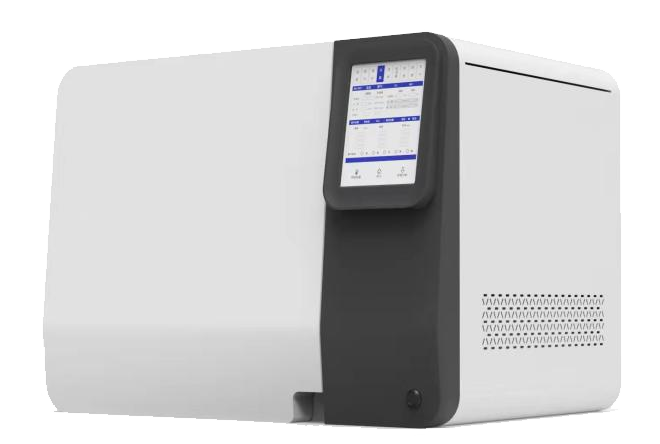
GC-7860 is a gas chromatograph with a 4 °C to 450 °C oven, an EPC-controlled gas path and a detection limit of 3×10⁻¹² g/s.
Full specifications for this model are listed at the top of this page.
Confirm these items before the final quotation. Accessories are listed only where the manufacturer offers them.
Ask for an itemized quotation that separates standard items from options.
Confirm requirements with our team before the final order.
The GC-7860 can be supplied with manual gas control or with full EPC/EFC control; it is a configuration decision at the order stage, not a retrofit. If you need reproducible retention times or method transfer between instruments, specify EPC.
The platform supports FID, ECD with a Ni-63 source, FPD for sulfur and phosphorus, and NPD. The FID path is quoted at ≤3×10⁻¹² g/s with a linear range of 10⁷; the ECD path reaches ≤1×10⁻¹⁴ g/s.
An IEEE 802.3 Ethernet interface lets a PC control the instrument online and collect the chromatographic data centrally. That is what makes it practical to supervise several instruments from one workstation instead of walking between them.
See how the model is positioned for real measurement tasks.
Chemical testing and material quality control.
Explore ApplicationsLet’s talk about your application
Share your sample, measurement requirements and preferred configuration.