Colorimeter Series
Colorimeter BC-2000H
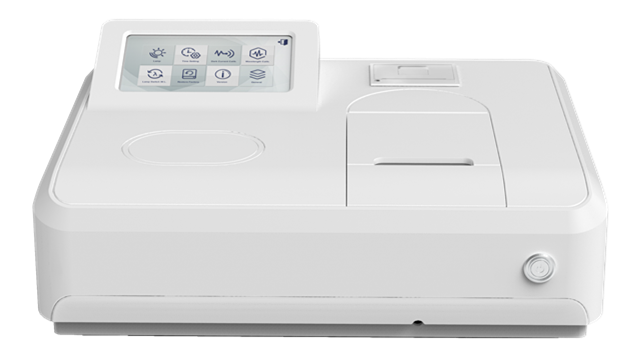
Colorimeter with a 7-inch high-resolution touchscreen and a user-friendly graphical interface.
- Measurement Method
- Platinum-Cobalt Colorimetry
- Measuring Range
- 0-500PCU
- Abs Range
- —0.3~3A

Application note · Food & Beverage
A method-first guide to fixed-wavelength color tests and routine absorbance work in food QC, including when a colorimeter is enough and when a spectrophotometer earns its place.

The short answer
Color and concentration are two different questions asked of the same platform. Color asks whether the sample matches a reference; concentration asks how much of a substance is present. Both can be answered by absorbance, and confusing the two is where routine food QC goes wrong.
Color is a perception, and a number that stands for it has to be defined: transmittance at a fixed wavelength, a platinum-cobalt value, or a set of tristimulus values. Each is valid and each answers a different question. A specification that says “color within limit” without naming the scale is not measurable.
For a single known analyte, a fixed wavelength and a calibration curve are enough. The discipline sits in the details: blank measured in the same cell, wavelength verified, curve bracketing the samples, and every dilution recorded with the result.
| Task | Measurement approach | Common error |
|---|---|---|
| Color against a reference | Transmittance at a fixed wavelength, or a color scale | Comparing values produced at a different path length |
| Color of a turbid sample | Filter or centrifuge, then measure | Reading the sample with particles in suspension |
| Single analyte, routine | Calibration curve at a fixed wavelength | Sample outside the calibrated range |
| Scanning for a maximum | Spectral scan before fixing the wavelength | Choosing a wavelength from a published method without checking it on this matrix |
A colorimeter is built for one job and does it quickly with a fixed optical geometry — appropriate when the measurement is a color scale at production frequency. A spectrophotometer covers the same measurement and adds the ability to locate a wavelength, scan a spectrum and run a second method. Choose by the number of methods, not by the number of samples.
Color standards drift and fade. A reference material that has aged quietly shifts every result that depends on it, so the standards need their own check and their own replacement interval. Write both down, and record the standard’s identifier with the result.
In color work the cell is part of the method. Path length, cleanliness, filling height and orientation all change the reading. Keep one cell per product where possible, check it against a blank at the start of the shift, and handle it by the frosted faces only.
Four failures recur. A sample read without filtration, so particles add apparent absorbance. A cell used in a different orientation from the one it was filled in. A reference standard that has aged past its own validity. And a result compared with a value produced on a different instrument type, where the optical geometry differs enough to change the number.
All four are cheap to prevent and hard to detect afterwards, because each produces a plausible value rather than an error message.
Send the color scale required, the sample form and path length, the number of methods the laboratory runs, the sample frequency and the record format. Those five decide the platform.
The configuration described above, with the full specification of each model.
Colorimeter Series
Colorimeter with a 7-inch high-resolution touchscreen and a user-friendly graphical interface.
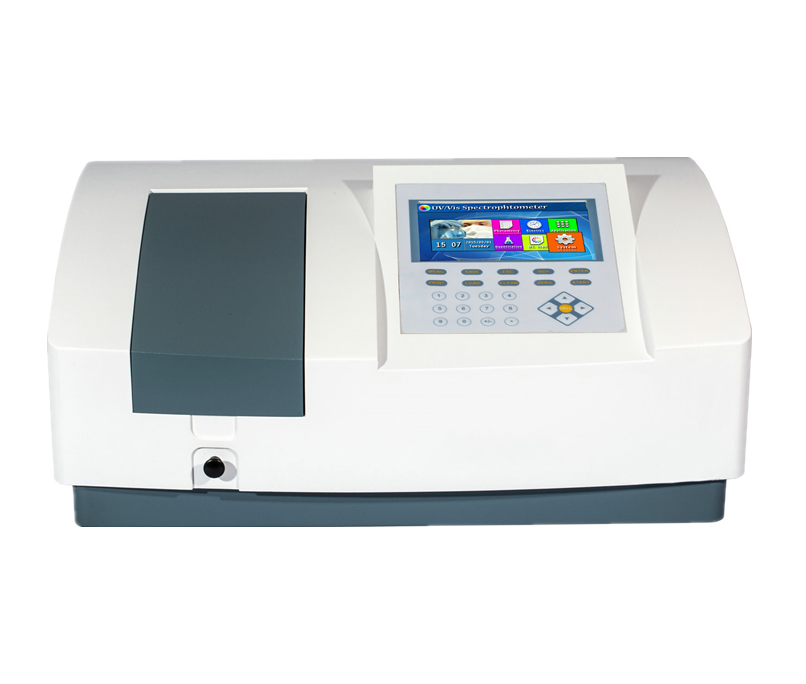
7-inch color screen and Windows graphic interface.
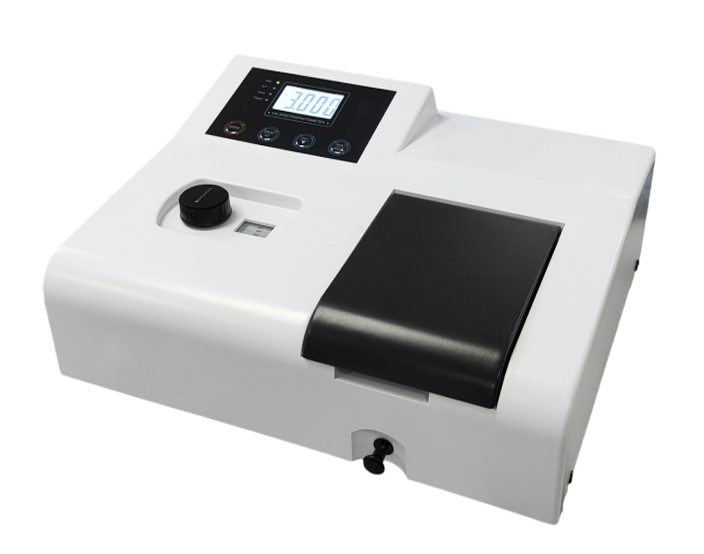
Five basic single-beam spectrophotometers from V1000 to UV1100N, with a 1200 lines/mm grating, for routine visible and UV-Vis measurement.
It can produce the same measurement and more, at a lower throughput per sample and a higher cost. Where the only task is a color scale at production frequency, a dedicated colorimeter is the more practical instrument.
Different optical geometry, different cell path, or a different scale. Color numbers are only comparable when the instrument type, the path length and the scale are the same — which is why the specification has to name all three.
Yes. Particles scatter light and add apparent absorbance, so a turbid sample reads darker than it is. Filter or centrifuge before measurement, and state which in the method.
Application note
The five measurements that cover most food and beverage specifications, the instruments that deliver them, and when a…
Application note
Why homogenization, portion size and holding time often decide whether a food result transfers between laboratories — and…
Application note
How weighing, moisture and acidity can be planned as one connected food release workflow — one portion, one…
Let’s talk about your application
Send the sample, the concentration range and the reference method. We will confirm the instrument and the accessories.